
ファストボールの球速を上げるには?
Strength × Lower-Body Power × Rotational Power × Pitching Mechanics
Fastball Velocityとは? なぜ重要?
ファストボールの球速は、野球投手のパフォーマンスを左右する重要な要素の一つです。
しかし、
「腕を速く振れば球速が上がる」
という単純なものではありません。
投球は、
Ground → Lower Extremity → Pelvis → Trunk → Shoulder → Elbow → Hand → Ball
へと力を伝える全身運動です。
高校・大学投手を対象としたbiomechanical studyでは、球速を予測する重要な変数として、
- Lead-leg ground reaction force
- Pelvisとtrunk rotationのタイミング
- Trunk forward flexion
- Humeral rotation velocity
- Elbow extension velocity
などが挙げられています。¹ これは、球速が一つの関節ではなくkinetic chain全体から生み出されることを示しています。
また、Division I投手では、Countermovement Jump(CMJ)のconcentric impulseとpeak powerがfastball velocityと強く相関しており、lower-body explosive abilityの重要性が示されています。²
つまり球速向上では、
Strength + Power + Mechanics + Throwing Skill
を総合的に高めることが重要です。

どうすれば球速が上がるのか?
① Lower-Body Strengthを高める
まず重要なのは、地面に大きな力を加える能力です。
例えば、
- Squat
- Romanian Deadlift
- Split Squat
- Deadlift系エクササイズ
などで、股関節・膝関節を中心としたforce-producing capacityを高めます。
Resistance trainingはbaseball throwing velocity向上のために広く支持されており、軽い負荷から比較的重い負荷まで、複数のloading zoneを使用することが推奨されています。³
② Lower-Body Explosive Powerを高める
筋力があっても、その力を投球動作の短い時間内に発揮できなければ十分ではありません。
そこで、
- Countermovement Jump
- Broad Jump
- Lateral Bound
- Single-Leg Jump
などのexplosive trainingを使用します。
特にCMJのconcentric impulse・peak powerと球速の関連が報告されており、² collegiate pitchersではlateral bound powerも球速と関連しました。
投球は前方だけでなく、vertical・horizontal・lateralなforce productionを統合する動作と考えることができます。
③ Rotational Powerを高める
Pitchingではpelvisとtrunkが高速に回旋し、そのエネルギーが上肢へ伝わります。
そのため、
- Medicine Ball Rotational Throw
- Step-Behind Rotational Throw
- Scoop Toss
- Shot-Put Style Medicine Ball Throw
などを利用して、下半身から体幹を通して上肢へ力を伝える能力をトレーニングできます。
Systematic reviewでは、hip–shoulder separation、trunk power、trunk rotation timingなどが高い球速と関連しています。⁴ Hip–shoulder separationはある研究で約2.6 mph高い球速と関連していましたが、これは「大きく捻ればよい」という意味ではありません。重要なのは個々の投手が効率よくsequencingできることです。
④ Pitching MechanicsとSequencingを改善する
球速向上では、力を作るだけでなく、
作った力をいつ・どの順番で伝えるか
が重要です。
注目したい要素には、
- Stride strategy
- Lead-leg force / stabilization
- Pelvis rotation
- Pelvis → trunk sequencing
- Hip–shoulder separation
- Trunk rotation
- Arm acceleration
- Release position
などがあります。
Biomechanical evidenceでは、proximal-to-distal sequencingが球速と関連し、各segmentの速度を単独で上げるだけよりも、適切な順序で力を伝えることの重要性が示されています。⁵
ただし「すべての投手が同じフォーム」である必要はありません。
Mechanics trainingでは、
効率よくmomentumを作る → transferする → releaseする
ことを目標とします。
⑤ Mobilityは「必要な分だけ」確保する
Hip rotation、thoracic rotation、shoulder rotationなどが著しく制限されている場合、投球mechanicsを作る妨げになる可能性があります。
その場合には、
- Hip rotation mobility
- Thoracic rotation mobility
- Shoulder rotational mobility
などを個別に取り入れます。
ただし現時点のエビデンスでは、
Mobility exerciseそのものが直接球速を上げる
という根拠は、strengthやthrowing-specific trainingほど強くありません。
したがって、必要なmotionを確保するためのsupporting componentとして使用するのが適切です。³
⑥ 実際に速く投げる練習も必要
最終的に球速を上げるには、実際のthrowing trainingが必要です。
特に、
Flat Ground → Mound → High-Intent Fastball
へ段階的に移行します。
Youth pitchersを対象とした15週間のtraining programでは、3・4 ozのlighter baseballと通常の5 oz ballを使用し、平均fastball velocityが4.8 mph改善しました。参加した44名では肩・肘の野球関連傷害は報告されませんでした。ただしcase seriesであり、lighter ballそのものだけの効果を証明した研究ではありません。⁸
同プログラムの分析ではmound throwingを含む後半に大きなvelocity gainがみられ、velocity developmentでも実際のpitching-specific practiceが重要であることが示唆されています。⁹
Weighted Ballは使うべき?
慎重に考える必要があります。
6週間のweighted-ball RCTでは、球速が3.3%向上しました。しかし同時にshoulder external rotationが増加し、experimental groupでは24%のinjury rateが報告され、4名がelbow injuryを経験しました。⁶
Reviewでもweighted-ball programによるvelocity gainは報告されていますが、
- Ball weight
- Throwing volume
- Intensity
- Progression
- Athlete age
などが研究によって大きく異なり、「最適で安全なprotocol」は確立されていません。⁷
したがって、このPhysio Academiaの基本プログラムではheavy weighted-ball throwingを必須項目にはしません。
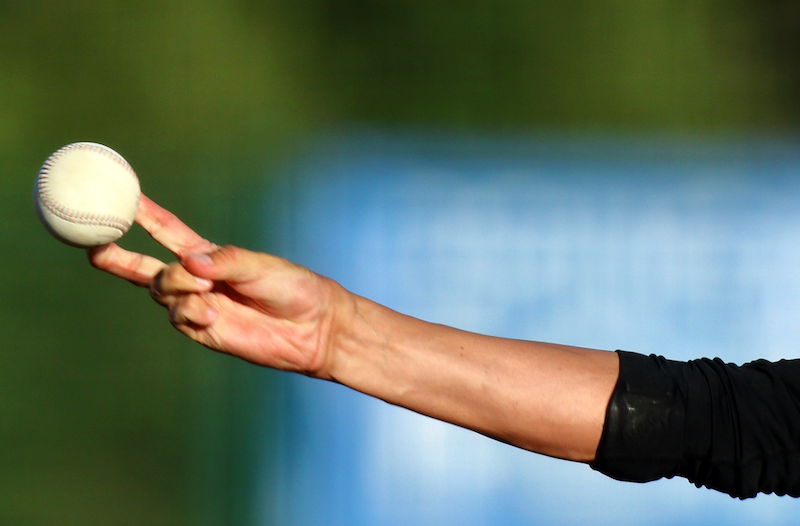
シンプルな球速アップトレーニングプログラム
- Squat
目的:
Lower-body strengthとground-force productionの基礎を作る。
- Romanian Deadlift
目的:
Hip extensor / posterior-chain strengthを高める。
- Split Squat
目的:
投球に重要なunilateral lower-extremity strengthを高める。
- Countermovement Jump
目的:
Vertical lower-body impulseとexplosive powerを高める。
- Lateral Bound
目的:
Lateral / horizontal lower-body powerを高める。
- Medicine Ball Rotational Throw
目的:
Pelvis → trunk → upper extremityへのrotational power transferを高める。
- Step-Behind Medicine Ball Throw
目的:
Momentum creationとrotational powerを統合する。
- Individual Mobility Work
必要に応じて、
- Hip rotation
- Thoracic rotation
- Shoulder rotation
を改善します。
目的:
効率的な投球mechanicsに必要な可動性を確保する。
- Pitching Mechanics / Sequencing Drill
重点:
- Stride
- Lead-leg stabilization
- Pelvis → trunk sequencing
- Trunk rotation
- Efficient arm acceleration
目的:
作った力を効率よくballへtransferする。
- Progressive Throwing
Easy Throwing → Higher Intent → Mound
へ進めます。
目的:
physical capacityを実際のthrowing velocityへtransferする。
- Fastball Mound Work
実際のmoundからfastballを投げ、mechanicsとvelocityを確認します。
目的:
最もsport-specificなvelocity training。
- Optional: Lighter-Ball Throwing
適切な監督下で3~4 ozなどのlighter ballを選択肢として使用できます。
Heavy weighted-ball throwingは必須ではありません。
- Reassess
- Fastball velocity
- Command / accuracy
- Lower-body power
- Lateral bound
- Pitching mechanics
- Throwing workload
- Shoulder / elbow symptoms
- Recovery
を確認します。
< Take-Home Message >
Fastball velocityを上げるために、
腕だけを強くする
あるいは
とにかく全力投球を増やす
という考え方は適切ではありません。
より実践的なのは、
Build Lower-Body Strength
↓
Develop Explosive & Rotational Power
↓
Optimize Kinetic-Chain Sequencing
↓
Practice High-Quality Throwing
↓
Transfer It to the Mound
という流れです。
特に、lower-body power、lead-leg force、pelvis–trunk sequencing、rotational power、そして実際のmound pitchingを組み合わせることが、現在のエビデンスと整合したfastball velocity developmentの基本戦略です。¹⁻⁵

<PDF file>
< Reference >
- Nicholson KF, Collins GS, Waterman BR, Bullock GS. Machine learning and statistical prediction of fastball velocity with biomechanical predictors. J Biomech. 2022;134:110999. doi:10.1016/j.jbiomech.2022.110999.
- Sakurai M, Qiao M, Szymanski DJ, Crotin RL. Countermovement jump and momentum generation associations to fastball velocity performance among Division I collegiate pitchers. J Strength Cond Res. 2024;38(7):1288-1294. doi:10.1519/JSC.0000000000004776.
- Job TDW, Neville J, Cahill MJ, Bourgeois FA, Crotin RL, Cronin JB. Training methods to increase throwing velocity in baseball athletes: a brief review. Strength Cond J. 2022;44(4):1-9. doi:10.1519/SSC.0000000000000694.
- Kew ME, Koo A, Manzi JE, et al. Kinematic parameters predictive of pitch velocity in youth to professional baseball pitchers: a qualitative systematic review. Orthop J Sports Med. 2023;11(11):23259671231196539. doi:10.1177/23259671231196539.
- Manzi JE, Dowling B, Wang Z, et al. An analysis of intrapitch variation in joint and segment velocities with throwing arm kinetics in high school and professional baseball pitchers. Am J Sports Med. 2024;52(7). doi:10.1177/03635465241247546.
- Reinold MM, Macrina LC, Fleisig GS, Aune K, Andrews JR. Effect of a 6-week weighted baseball throwing program on pitch velocity, pitching arm biomechanics, passive range of motion, and injury rates. Sports Health. 2018;10(4):327-333. doi:10.1177/1941738118779909.
- Melugin HP, Smart A, Verhoeven M, Dines JS, Camp CL. The evidence behind weighted ball throwing programs for the baseball player: do they work and are they safe? Curr Rev Musculoskelet Med. 2021;14(1):88-94. doi:10.1007/s12178-020-09686-0.
- Erickson BJ, Atlee TR, Chalmers PN, et al. Training with lighter baseballs increases velocity without increasing the injury risk. Orthop J Sports Med. 2020;8(3):2325967120910503. doi:10.1177/2325967120910503.
- Hadley C, Atlee TR, Chalmers PN, et al. Does velocity increase from flat-ground to mound work during a lighter baseball training program? J Am Acad Orthop Surg. 2021;29(19):827-831. doi:10.5435/JAAOS-D-19-00876.