
テニスのサーブ速度を上げるには?
Strength × Plyometric × Whole-Chain Power × Serve-Specific Training
Serve Velocityとは? なぜスポーツで重要?
サーブはテニスで唯一、相手のボールに反応せず自分から開始できるショットです。
サーブ速度を高めることで相手のreturn時間を短くし、サービスゲームでより攻撃的な展開を作れる可能性があります。
しかし、速いサーブは単純な「肩や腕の強さ」で生まれるわけではありません。
テニスサーブは、
Leg Drive
→ Hip / Pelvis
→ Trunk
→ Shoulder
→ Arm
→ Racket
へ力を伝える全身のkinetic-chain movementです。²
Serve velocityに関連する身体的要素として、
- Lower-body force production
- Rate of Force Development(RFD)
- Impulse
- Shoulder strength / power
- Rotational power
- Whole-body coordination
などが報告されています。²,³
実際、serve動作に近いpositionでの最大isometric strength、RFD、短時間のimpulseはserve velocityと関連しています。³
そのため、
「腕を速く振る」だけではなく、全身で力を作り、それをラケットへ素早く伝える能力
を高めることが重要です。
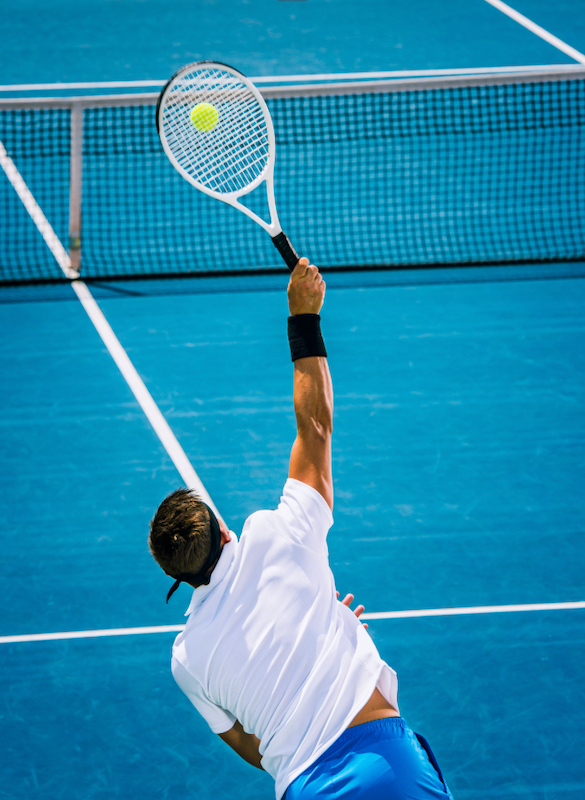
テニスのサーブ球速 どう取り組むのか
① Whole-Body Strengthを高める
2025年のsystematic review / meta-analysisでは、resistance trainingによってserve speedが有意に改善し、複数のトレーニング方法を組み合わせたmultimodal trainingではさらに大きな効果がみられました。¹
一方、core training単独では有意なserve-speed improvementは認められませんでした。¹
そのため、
- Squat
- Split Squat
- Romanian Deadlift
- Upper-body press / pull
などを利用して全身のforce-producing capacityを高めます。
目的は一つの筋肉を強くすることではなく、serveのkinetic chain全体の土台を作ることです。
② Leg DriveとExplosive Powerを高める
Serveでは下肢から地面へ力を加え、その力を上方・前方へ伝えます。
Force-plate studyでは、単にvertical forceを大きくすることよりも、vertical方向とanteroposterior方向のforceを適切なタイミングで発揮することがracket velocityと関連していました。⁴
つまり、
「強く地面を押す」だけでなく、「適切な方向へ、適切なタイミングで押す」
ことが重要です。
トレーニングでは、
- Countermovement Jump
- Jump Squat
- Split-Squat Jump
などを利用してexplosive lower-body powerを高めます。
③ Serve-Specific Rotational Powerを高める
Medicine ball exerciseは、strengthを実際のserveに近い全身運動へつなげる方法として有用です。
Professional tennis playersを対象とした研究では、serveに近いmultisegment movementを用いたmedicine-ball shot-put throwがserve velocityを説明する最も強いphysical testとなりました。⁵
そのため、
- Medicine Ball Serve Throw
- Rotational Medicine Ball Throw
- Step-In Shot-Put Throw
- Overhead Medicine Ball Throw
などを使用できます。
ポイントは腕だけで投げることではなく、
Legs → Pelvis → Trunk → Arm
へ力をつなげることです。
④ Shoulder StrengthとHigh-Velocity Powerを高める
上肢のstrength / powerも重要です。
若い競技テニス選手を対象とした研究では、6週間のserve-specific isometric shoulder trainingによってserve velocityが**7.0%改善し、accuracyは低下しませんでした。**⁶
また、6週間のjoint-specific flywheel programでもserve velocityが約4.7%改善し、accuracyの低下はみられませんでした。⁷
さらに8週間のupper-limb plyometric trainingでも、shoulder strength、power、serve velocityが改善しています。⁸
したがって、
- Serve-position shoulder internal rotation
- Shoulder flexion power
- Upper-limb plyometric exercise
などをwhole-body programへ加えることができます。
⑤ Serve Mechanicsを改善する
Physical capacityを高めても、それをserveへtransferできなければ意味がありません。
特に重要なのは、
Leg Drive → Trunk Rotation → Upper-Body Acceleration
のタイミングです。
Junior tennis playersを対象としたRCTでは、serve中のknee flexionを増やすtrainingによってracket velocityが改善し、upper-limb joint velocityを増加させることなくパフォーマンスが向上しました。⁹
つまり、より強く腕を振るのではなく、下肢をより効果的に使うことでracket speedを高められる可能性があります。
ただし、これは「全員が膝をできるだけ深く曲げるべき」という意味ではありません。
選手それぞれのserve styleに合わせて、
- Knee flexion / extension
- Leg drive
- Pelvis / trunk rotation
- Toss and impact position
- Segment sequencing
を改善します。
⑥ 実際のServeを速く打つ練習をする
Strengthやmedicine-ball powerが上がっても、最終的には実際にserveを打つ必要があります。
Training specificityを考えると、
Physical Training
→ Serve-Like Power Exercise
→ Technical Serve Drill
→ Full-Speed Serve
へ移行するのが実践的です。
また、serve velocityだけでなくaccuracyも同時に確認します。
Serve speedが上がってもservice boxに入らなければ、実際のperformance improvementとは言えません。
Mobility Trainingは必要?
必要な場合には行いますが、mobility training単独をvelocity programの中心にはしません。
例えば、
- Shoulder rotation
- Thoracic rotation / extension
- Hip mobility
- Ankle mobility
に明確な制限があり、それがleg driveやserve mechanicsを妨げている場合には介入します。
今回のエビデンスでは、mobilityを増やすこと自体が直接serve velocityを上げるという根拠より、strength・power・serve-specific trainingの方が強く支持されています。

シンプルなテニスのサーブ球速アップトレーニングプログラム
以下は、現在のエビデンスから作成した一つの実践例です。
特定の研究でこの組み合わせ全体が検証されたわけではありません。
- Squat
目的:
Leg driveのためのlower-body strengthを作る。
- Split Squat
目的:
Unilateral lower-body strengthとserve stanceでのforce productionを高める。
- Romanian Deadlift
目的:
Hip extensor / posterior-chain strengthを高める。
- Countermovement Jump
目的:
Lower-body explosive powerとrapid force productionを高める。
- Medicine Ball Serve Throw
Serveに近いwhole-body motionでmedicine ballを投げます。
目的:
Legs → trunk → upper limbへのpower transferを高める。
- Step-In / Shot-Put Medicine Ball Throw
目的:
Forward + rotational powerとsegmental coordinationを高める。
- Serve-Position Shoulder Internal Rotation
Band、cable、または適切なresistanceを利用します。
目的:
Serve-specific shoulder strength / force productionを高める。
- Upper-Limb Plyometric Exercise
例:
- Medicine Ball Chest Pass
- Plyometric Push-Up
- Rapid Medicine Ball Throw
目的:
Upper-extremity rapid force productionを高める。
- Individual Mobility Work
必要に応じて、
- Shoulder
- Thoracic spine
- Hip
- Ankle
を改善します。
目的:
Serve mechanicsに必要なmotionを確保する。
- Leg-Drive Serve Drill
Serve motionの中で、
Knee Flexion → Leg Extension → Upward / Forward Drive
を練習します。
目的:
下肢の力をserveへtransferする。
- Serve Sequencing Drill
低〜中速度から、
Legs → Pelvis / Trunk → Arm → Racket
のsequencingを練習します。
目的:
whole kinetic chainを効率よくつなげる。
- High-Intent Serve Practice
実際のserveでvelocityを高めます。
目的:
Physical capacityを実際のball velocityへtransferする。
- Velocity + Accuracy Practice
Targetを設定し、速度とaccuracyを同時に確認します。
目的:
「速いserve」ではなく、試合で使える速いserveを作る。
Reassess
確認する項目:
- Serve velocity
- Serve accuracy
- Medicine-ball throw distance / velocity
- Lower-body power
- Shoulder strength / power
- Leg-drive mechanics
- Impact position
- Serve sequencing
- Shoulder / elbow symptoms
< Take-Home Message >
Tennis serve velocityを上げるために、
肩だけを鍛える
あるいは
serveだけを全力で打ち続ける
必要はありません。
現在のエビデンスから最も実践的なのは、
Build Whole-Body Strength
↓
Develop Explosive Leg Drive
↓
Build Rotational & Upper-Limb Power
↓
Optimize Serve Mechanics
↓
Practice Fast + Accurate Serves
というmultimodal approachです。¹⁻⁹
特に重要なのは、
全身で作った力を、適切なタイミングでラケットへ伝えること。
Serve velocityは「腕の速さ」ではなく、whole kinetic chainのperformanceとして考えることが重要です。

<PDF file>
< Reference >
- Deng N, Soh KG, Xu F, Yang X. The effects of strength and conditioning interventions on serve speed in tennis players: a systematic review and meta-analysis. Front Physiol. 2025;15:1469965. doi:10.3389/fphys.2024.1469965.
- Colomar J, Corbi F, Brich Q, Baiget E. Determinant physical factors of tennis serve velocity: a brief review. Int J Sports Physiol Perform. 2022;17(8):1159-1169. doi:10.1123/ijspp.2022-0091.
- Colomar J, Corbi F, Baiget E. Relationship between isometric force-time curve variables and serve velocity in young tennis players. Sports Biomech. 2024;23(12):3009-3021. doi:10.1080/14763141.2022.2084151.
- Fourel L, Touzard P, Fadier M, et al. Relationships between force-time curve variables and tennis serve performance in competitive tennis players. J Strength Cond Res. 2024;38(9):1667-1674. doi:10.1519/JSC.0000000000004848.
- Sánchez-Pay A, Ramón-Llin J, Martínez-Gallego R, Sanz-Rivas D, Sánchez-Alcaraz BJ, Frutos S. Fitness testing in tennis: influence of anthropometric characteristics, physical performance, and functional test on serve velocity in professional players. PLoS One. 2021;16(11):e0259497. doi:10.1371/journal.pone.0259497.
- Baiget E, Colomar J, Corbi F. Six-week joint-specific isometric strength training improves serve velocity in young tennis players. Int J Sports Physiol Perform. 2023;18(2):148-156. doi:10.1123/ijspp.2022-0292.
- Sandoval I, Colomar J, Corbi F, Baiget E. Effects of 6-week flywheel resistance training on tennis serve velocity and accuracy. J Sports Med Phys Fitness. 2025;65(12):1590-1598. doi:10.23736/S0022-4707.25.16732-7.
- Wang J, Xu Q. Single-session upper limb plyometric training is as effective as two sessions for improving muscle strength, power, and serve velocity in male youth tennis players: a randomized parallel controlled study. Front Psychol. 2025;16:1539739. doi:10.3389/fpsyg.2025.1539739.
- Hornestam JF, Souza TR, Magalhães FA, Begon M, Elliott B, Fonseca ST. Training junior tennis players to increase knee flexion improves their service performance. Sports Biomech. 2026;25(5):643-658. doi:10.1080/14763141.2025.2568220.